What Luxury Mental Health and Addiction Treatment Offers

Medical Providers:
Dr. Michael Vines, MD
Alex Spritzer, FNP, CARN-AP, PMHNP
Clinical Providers:
Natalie Foster, LPC-S, MS
Last Updated: September 25, 2026

In 2022, about 21.5 million U.S. adults had both a mental illness and a substance use disorder. That’s a crowd, not a niche. For many of them, one condition keeps feeding the other while care reaches only half the picture. Luxury mental health and addiction treatment was built to close that gap. It pairs serious clinical work with a setting people can stand to stay in.


Our Addiction Treatment Centers

Healing starts with one call. Your private path is waiting.

What does luxury mental health and addiction treatment actually include?

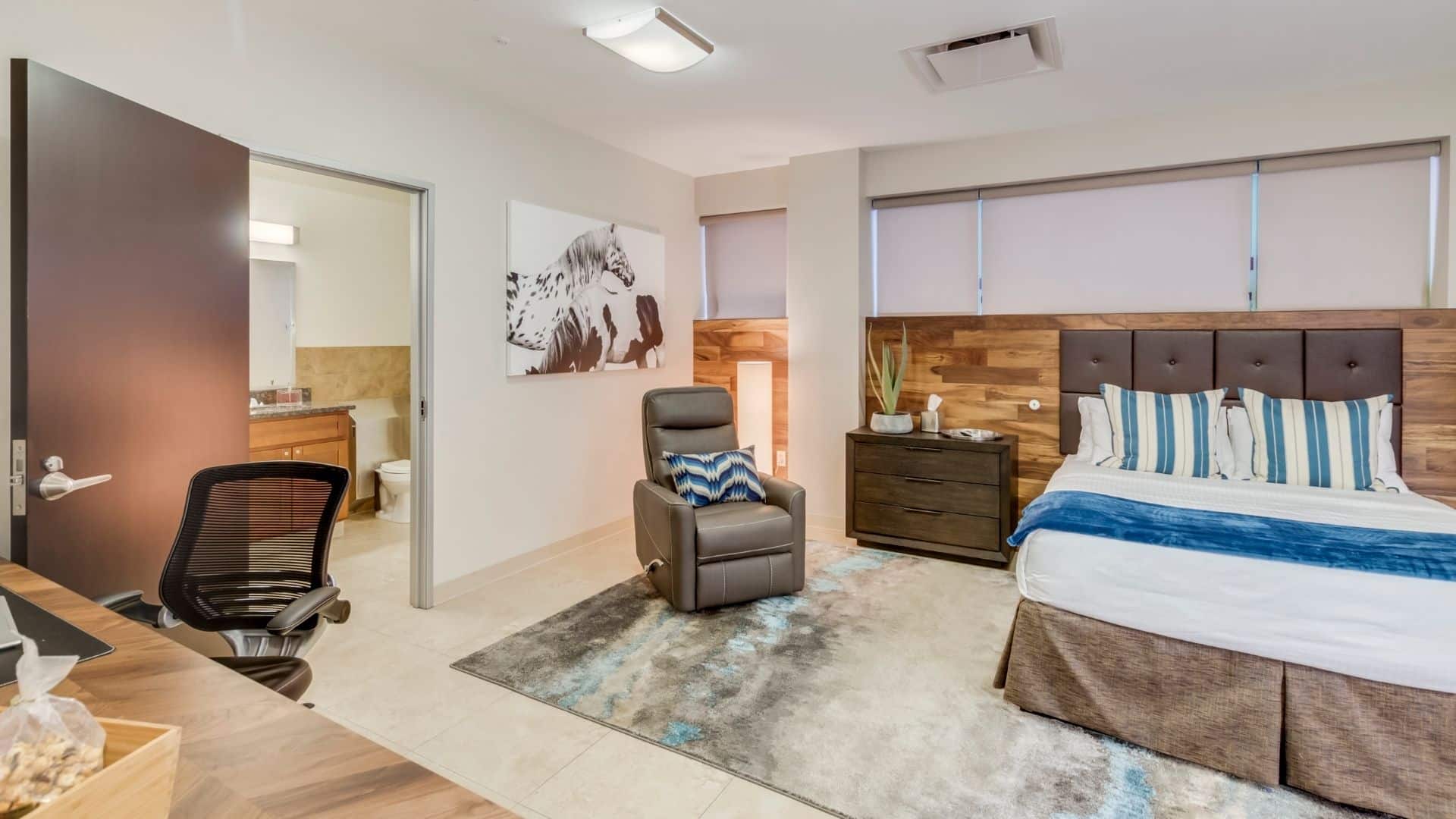
Picture a small residence, not a hospital wing. A luxury rehab center typically offers private rooms, chef-prepared meals, quiet grounds, and low client-to-clinician ratios. The comfort isn’t the point, though. The setting makes the clinical work possible.

Underneath the amenities sits the part that matters: a full level of care built around medical oversight, psychiatric evaluation, and daily therapy. A strong luxury mental health rehab won’t hand you a spa schedule and call it treatment. It matches your treatment options to your diagnosis, your history, and how severe things have become.

A typical day might open with a medical check-in, move through individual and group sessions, and wind down with something quieter, like a walk or journaling. Structure matters. For a mind that’s been running on chaos, a predictable rhythm gives it something to lean on.

That range is what separates luxury addiction treatment Arizona programs from a standard stay. Desert quiet helps. So does distance from the routines and relationships that fed the problem. People often arrive exhausted, and a calm place to land changes how much they can absorb in those first critical weeks.

Why do addiction and mental health need to be treated together?

Someone drinks to quiet anxiety. Someone else develops panic attacks after years of stimulant use. Which came first? Often, even the person living it can’t say.

That tangle is why addiction and mental health can’t be handled in separate buildings by separate teams. Treat only the substance use disorders, and untreated depression or trauma pulls a person back toward the bottle. Treat only the mental health issues, and cravings undo the progress. Luxury dual diagnosis treatment puts both under one roof with one coordinated plan.

A luxury rehab for co-occurring disorders usually starts with a thorough assessment. Psychiatrists, therapists, and addiction specialists compare notes, so nothing slips through. If you’ve been told your struggle was addiction or mental health, but never both, it may deserve a second look. Plenty of people cycle through programs for years because only half of substance abuse and mental health care ever reached them.

Medication belongs in that conversation, too. Antidepressants, mood stabilizers and sleep or anxiety aids need careful handling when someone has a history of misuse. A team that sees both diagnoses can weigh those choices together, instead of one prescriber quietly undoing another’s work.

Good behavioral health treatment looks at the whole picture, not just the loudest symptom.

Both conditions deserve real care. Talk to someone who understands.

What happens during detox and withdrawal?

Detox is where fear lives. Shaking, nausea, insomnia, and racing thoughts are common, and withdrawal symptoms vary by substance. Some, like alcohol or benzodiazepine withdrawal, can be dangerous without medical supervision.

In a luxury setting, a medical team monitors you around the clock and eases discomfort with medication when appropriate. Privacy matters more here than most people expect. Getting through the worst days in a private room, not a shared ward, lowers the shame that so often derails early addiction recovery.

Length varies. Some people need a few days, others more than a week, and the medical team sets the pace, not a calendar. Once the body steadies, the move into residential therapy should feel like a hallway walk, not a hard reset with a new building and unfamiliar faces.

Withdrawal also stirs up the emotions people have been numbing. Anxiety spikes. Low moods deepen. So mental health treatment begins on day one rather than waiting for detox to end. Clinicians watch how mental health and substance use symptoms interact and adjust care as the body clears. Think of it as wiping fog off a windshield. You can’t fix what you can’t see, and detox finally lets the team see it.

Which therapies does a holistic luxury rehab use?

A holistic luxury rehab doesn’t swap science for scented candles. It layers complementary practices on top of evidence-based ones.

The backbone is usually cognitive behavioral therapy (CBT), which teaches people to catch distorted thoughts and break the loops that lead to relapse. Trauma-focused work and medication management often sit alongside it, depending on the diagnosis.

Then come the extras. Equine therapy pairs clients with horses, animals that respond to body language and mood, which makes avoiding your own emotions surprisingly hard. Family therapy brings loved ones into the process, because mental health and addiction rarely affect just one person. Yoga, meditation, breathwork, and nutrition round things out, supporting the mind, body, and spirit together.

Group sessions deserve a mention, too. Hearing someone else describe a 3 a.m. craving in words you could have used yourself has a way of ending the isolation that addiction depends on. It’s hard to fake that kind of recognition.

None of it is decoration. Each practice gives someone another way to cope when cravings or panic hit. The best programs let clients try several and keep what works, since a rigid menu of treatment options rarely fits a real person.

Your recovery should feel personal. Start the conversation today.

Does a comfortable setting really change outcomes?

Skeptics have a fair point: a nicer bedroom doesn’t cure anything. Therapy does. But comfort removes obstacles that quietly sabotage treatment.

Consider the professional who won’t enter a crowded facility for fear of being recognized. Or the parent who can’t sleep on a thin mattress and leaves in week one. Privacy, good rest, and decent food sound like perks. In practice, they keep people in the building long enough for therapy to take hold.

Discretion carries weight, too. For executives, physicians, teachers, and anyone whose career rides on reputation, privacy isn’t vanity. It’s what lets them say yes to treatment in the first place.

Smaller census size matters as well. When a program serves a handful of clients rather than dozens, therapists know each person’s story, and progress doesn’t get lost in paperwork. That’s the real argument for luxury mental health and addiction treatment: not the thread count, but the attention it makes room for.

A price tag alone proves nothing, though. Ask about licensure, staff credentials, and how aftercare works. Ask, too, whether clinicians are trained in both mental health and substance use care, since a team schooled in only one tends to treat only one. A beautiful property with a thin clinical team is just a hotel.

What to Look for in a Program Like The Hope House

Start with direct questions. Can the team diagnose and treat both conditions? How are medications managed? What does a typical day look like, and what happens after discharge? Programs worth your time answer plainly.

Then trust your read of the place. Do staff listen more than they pitch? Does the setting feel calm rather than salesy? You’ll learn a lot in a single phone call.

Don’t overlook the exit plan. Ask whether step-down care, outpatient therapy, and alumni support are arranged before you arrive. Leaving treatment is a vulnerable moment, and a solid discharge plan often separates a good stay from a lasting one.

That’s the thinking behind The Hope House. As a luxury rehab center focused on luxury mental health and addiction treatment, The Hope House combines private accommodations, dual diagnosis expertise, and whole-person care for people ready to address both sides of their health. If you’re weighing options for yourself or someone you love, a conversation costs nothing and can clear up a lot.

Ready when you are. Reach out to The Hope House.