
What Private Addiction Treatment Arizona Offers

Medical Providers:
Dr. Michael Vines, MD
Alex Spritzer, FNP, CARN-AP, PMHNP
Clinical Providers:
Natalie Foster, LPC-S, MS
Last Updated: September 11, 2026

In 2025, 44.6 million Americans aged 12 or older, or 15.3% of that population, had a substance use disorder. Behind those numbers are people asking a quiet, practical question: where can I get help without my whole life going on display?

If that’s where you are, private addiction treatment Arizona programs may be worth a closer look. This guide covers what they offer and what to ask before you choose one.


Our Addiction Treatment Centers

Ready to take the first step? Speak with someone today.

How does medical detox work, and when is inpatient rehab in Arizona the right call?

Withdrawal can be worse than uncomfortable. With alcohol and some other substances, it can become dangerous without supervision. That’s why medical detox exists: nurses and physicians track vital signs, ease symptoms, and step in quickly if something goes wrong. If you’re considering alcohol rehab, this is usually where you’ll start, since stopping heavy drinking suddenly is among the riskier withdrawal situations.

Detox clears the body, but it doesn’t change the habits and triggers behind the drinking or drug use. Medication-assisted treatment can help bridge that gap for people recovering from opioids or alcohol. FDA-approved medications ease cravings, and counseling covers the rest.

So when does inpatient rehab in Arizona make sense? Usually when your home environment makes staying sober close to impossible, when you’ve relapsed after outpatient care, or when medical or psychiatric risks call for round-the-clock attention. Stepping away from daily life for a few weeks can feel drastic. For many people, it’s the first chance in years to focus on nothing but getting well.

Why does dual diagnosis treatment matter so much?

Addiction rarely travels alone. Anxiety, depression, trauma, and other mental health conditions often come with it, and each can feed the other. Drinking to quiet panic tends to make the panic worse. Treat only one side and the other can pull you back.

Dual diagnosis care addresses both together, through a team trained to see the connection. The SAMHSA survey behind that 44.6 million figure also tracks co-occurring mental health conditions alongside substance use disorders, because the two so often overlap.

A solid dual diagnosis treatment program usually includes a psychiatric evaluation, therapy for trauma or mood disorders, and medication management when appropriate. Ask who provides that care and how often. If a program sends you elsewhere for mental health support, it isn’t fully integrated.

One question is worth putting to any facility: if a new diagnosis surfaces in week two, what happens next?

Struggling with more than one thing? Get care for both.

What should you look for in treatment programs and rehab facilities?

Start with licensing and staffing. Arizona treatment centers should be able to tell you who’s on the clinical team, what credentials they hold, and how many patients each therapist sees. Vague answers are a red flag.

Flexibility matters too. Strong treatment programs are built around you, not the other way around. A 28-year-old with an opioid problem needs a different plan than a 55-year-old executive with heavy drinking and a stress disorder, so ask whether treatment plans get reviewed and adjusted during your stay.

Also think about the day you leave. Most residential addiction treatment Arizona programs run 30 to 90 days, and that window closes quickly. The best rehab facilities map out aftercare, from outpatient therapy to alumni groups, before discharge rather than on your final afternoon. Residential treatment shouldn’t end at a cliff edge.

Finally, ask about health services beyond therapy, such as nutrition, primary care, and sleep support. Recovery is physical, too.

How can The Hope House help?

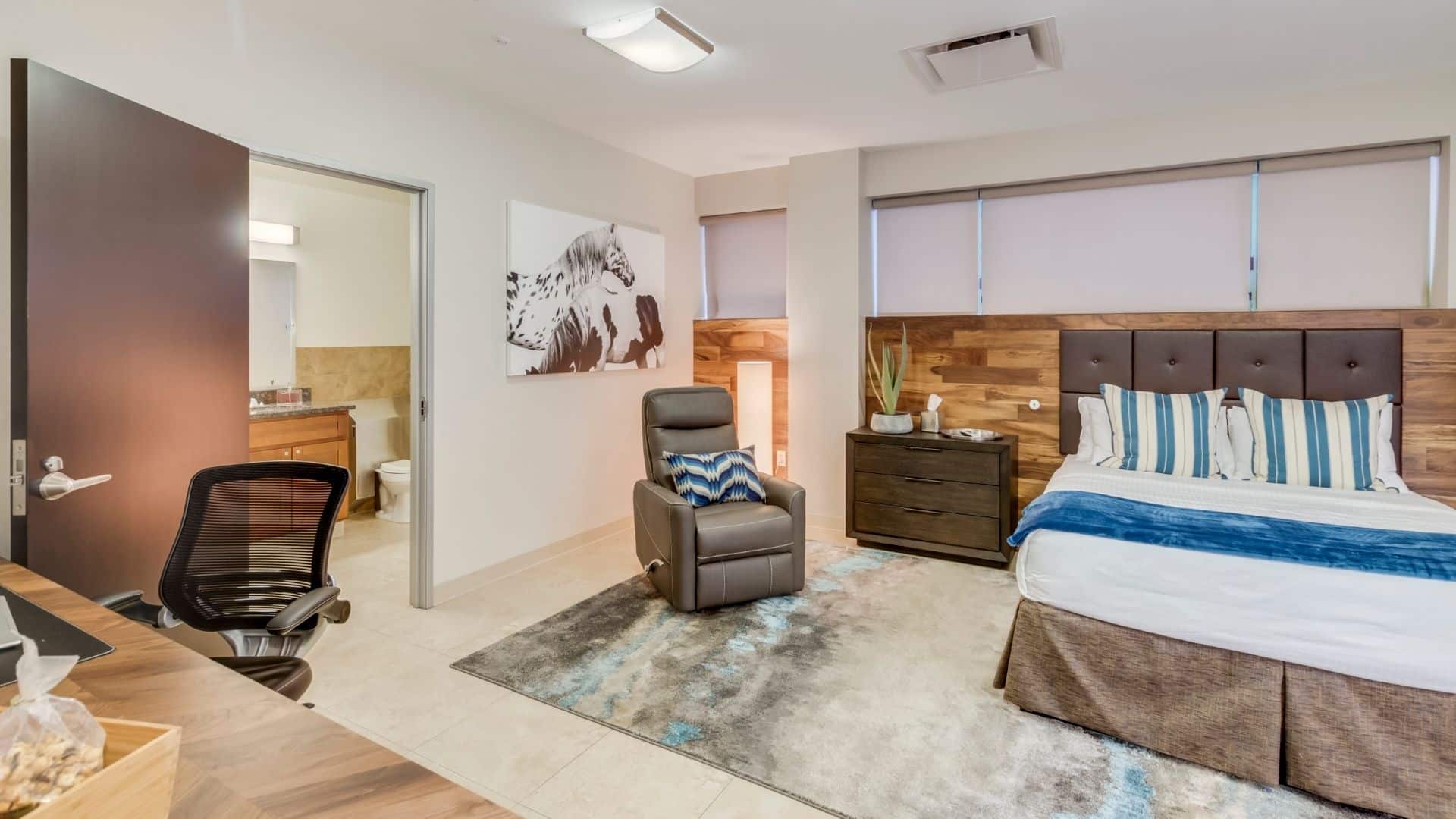
Choosing where to heal is a big decision, and it helps to work with a team that treats discretion and quality care as equally important. That’s the approach at The Hope House. Guests stay in private rooms, work with clinicians on individualized treatment plans, and can access medical detox, dual diagnosis treatment, and evidence based therapy in a setting that protects their privacy.

If you’re comparing private addiction treatment Arizona options, consider calling The Hope House and bringing the questions from this article. Listen to how they answer. A phone call commits you to nothing, and it may be the step you’ve been putting off.

Your recovery starts with a call. Make it today.