
Opioid & Fentanyl Rehab in Arizona

Reviewed by: Dr. Michael Vines, MD / Medically reviewed on: July 26

Opioid and fentanyl rehab is residential, medically supervised treatment that combines Medication-Assisted Treatment (MAT) with behavioral therapy to address opioid dependence.

Fentanyl is a synthetic opioid, and its presence in the current drug supply has made opioid addiction more dangerous to manage without clinical support. The Hope House provides opioid addiction treatment in Scottsdale, Arizona, through a private, individualized model.


Medical Providers:
Dr. Michael Vines, MD
Alex Spritzer, FNP, CARN-AP, PMHNP
Clinical Providers:
Natalie Foster, LPC-S, MS
Last Updated: July 26, 2026

Insurance can cover fentanyl rehab in Arizona, and opioid treatment as well, depending on the client’s plan and carrier. The Hope House accepts UnitedHealthcare, Blue Cross Blue Shield, GEHA, Aetna, and Cigna. Insurance verification is available before treatment begins, so clients can confirm coverage details ahead of admission rather than during a crisis.

Our Addiction Treatment Centers

Don’t wait until it’s too late. Start recovery today.

What Makes Fentanyl and Opioid Addiction Different to Treat

Fentanyl carries a higher overdose risk than most other opioids because it is significantly more potent and often present in counterfeit pills or mixed with other substances without the user’s knowledge. This unpredictability means a person cannot judge dosage by appearance, source, or past tolerance.

Opioid addiction broadly, including heroin addiction and prescription opioid dependence, still requires the same core treatment elements: medical stabilization, Medication Assisted Treatment (MAT) where appropriate, and behavioral therapy. What changes with fentanyl is the margin for error during use, which is why closer clinical attention during treatment matters

What Opioid Rehab and Fentanyl Rehab Looks Like at The Hope House

Opioid and fentanyl rehab at The Hope House starts with a clinical assessment, followed by an individualized treatment plan built around the client’s specific substance use, medical history, and any co-occurring conditions.

Care is delivered by master’s-level clinicians and supported by 24/7 addiction specialists. The Hope House treats opioid use disorder, fentanyl addiction, and heroin addiction as confirmed conditions, alongside alcohol and other substance use.

Medical Stabilization and Medication-Assisted Treatment (MAT)

Medication-Assisted Treatment (MAT) pairs FDA-regulated medication with counseling to address opioid dependence. Suboxone is used as part of Medication-Assisted Treatment at The Hope House. MAT is offered alongside evidence-based treatment options and is one part of a broader plan that also includes behavioral therapy and mental health support where needed.

Individualized Care Through a Smaller Client Census

A smaller client census allows clinicians to monitor each person more closely during opioid and fentanyl treatment. The Hope House limits each facility to 10 clients at a time, well below the Arizona average of 29.

For opioid and fentanyl cases specifically, this means master’s-level clinicians and 24/7 addiction specialists can track a smaller number of clients through medical stabilization and MAT, rather than dividing attention across a large group. Recovery is possible, and individualized attention is part of how The Hope House structures care to support it.

Who Opioid and Fentanyl Treatment Is For

Opioid and fentanyl treatment is for anyone whose use of these substances is affecting their health, safety, work, or relationships, regardless of how long the addiction has been present.

This includes people who started with prescribed pain medication and progressed to heroin or illicit fentanyl, as well as people whose use began recreationally. It also includes people managing addiction alongside anxiety, depression, or trauma, since these conditions often occur together and are treated concurrently in the Dual Diagnosis Program.

Treatment Options for Different Needs

Different clients need different structures around their treatment, which is why The Hope House offers more than one program pathway for opioid and fentanyl addiction.

Program Built for
Executive Treatment Program Professionals who need to maintain work obligations during treatment
Dual Diagnosis Program Clients with addiction alongside co-occurring mental health conditions
Luxury Rehab Program Clients seeking evidence-based care with individualized plans and guaranteed privacy

Executive Treatment Program for Working Professionals

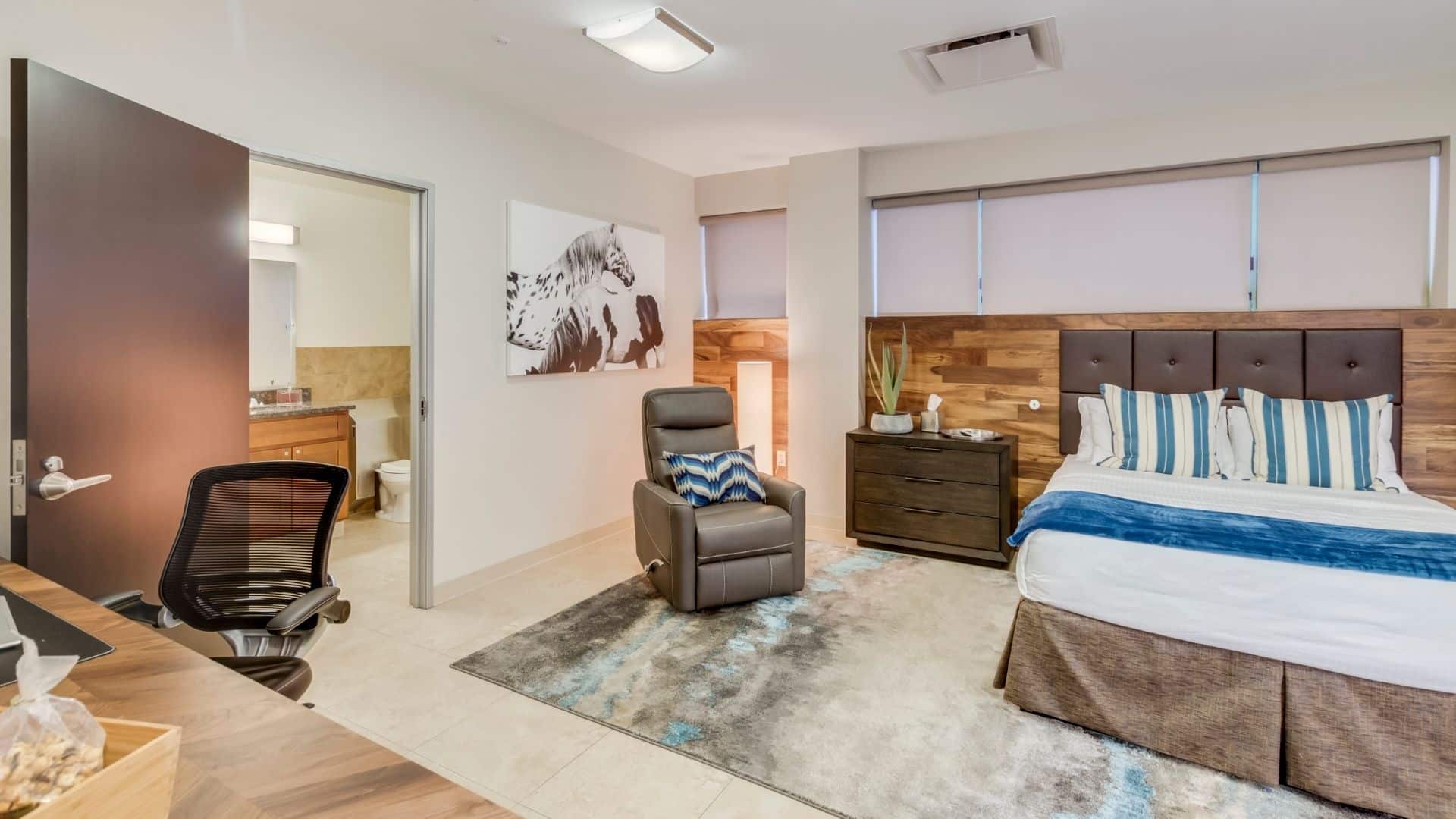
The Executive Treatment Program is built for professionals who cannot fully step away from work during opioid or fentanyl treatment. Clients in this program receive private rooms with electronic access and a modified treatment schedule that accommodates ongoing professional responsibilities, while still receiving the same clinical care as other programs.

Dual Diagnosis Program for Co-Occurring Conditions

The Dual Diagnosis Program treats addiction and co-occurring mental health conditions, such as anxiety, depression, or trauma, at the same time rather than sequentially. A mental health assessment is conducted on arrival to inform the treatment plan. This program is also the only one at The Hope House that includes equine therapy as part of its approach.

Does Insurance Cover Fentanyl Rehab in Arizona and Opioid Treatment

Insurance can cover fentanyl rehab in Arizona, and opioid treatment as well, depending on the client’s plan and carrier. The Hope House accepts UnitedHealthcare, Blue Cross Blue Shield, GEHA, Aetna, and Cigna. Insurance verification is available before treatment begins, so clients can confirm coverage details ahead of admission rather than during a crisis.

Don't face addiction alone. Speak with our admissions team today.

What to Do Next If You or a Family Member Needs Help

  1. Call The Hope House at (480) 447-4252 to speak with someone directly about opioid or fentanyl use.
  2. Complete a confidential admissions assessment so clinicians can understand the specific substance use and any co-occurring conditions involved.
  3. Ask about insurance verification if coverage through UnitedHealthcare, Blue Cross Blue Shield, GEHA, Aetna, or Cigna applies, so cost questions are answered before admission.
  4. Review program fit, whether that is the Executive Treatment Program, Dual Diagnosis Program, or Luxury Rehab Program, based on the assessment.
  5. Confirm admission timing directly with The Hope House, since a smaller client census means intake is coordinated individually rather than through a large waitlist process.

If you or someone else is in immediate danger from an overdose, call 911. For confidential support any time, call or text 988 (Suicide & Crisis Lifeline) or contact the SAMHSA National Helpline at 1-800-662-4357.

Outpatient care is available after residential treatment through partner programs, coordinated as part of the client’s continuing plan.

Recovery is possible, and confronting opioid or fentanyl addiction does not have to happen without support. The Hope House limits each facility to 10 clients at a time so that every person receives individual attention from master’s-level clinicians. Call (480) 447-4252 or contact us at thehopehouse.com to speak with someone today.

This step is worth taking. Speak with our admissions team today.