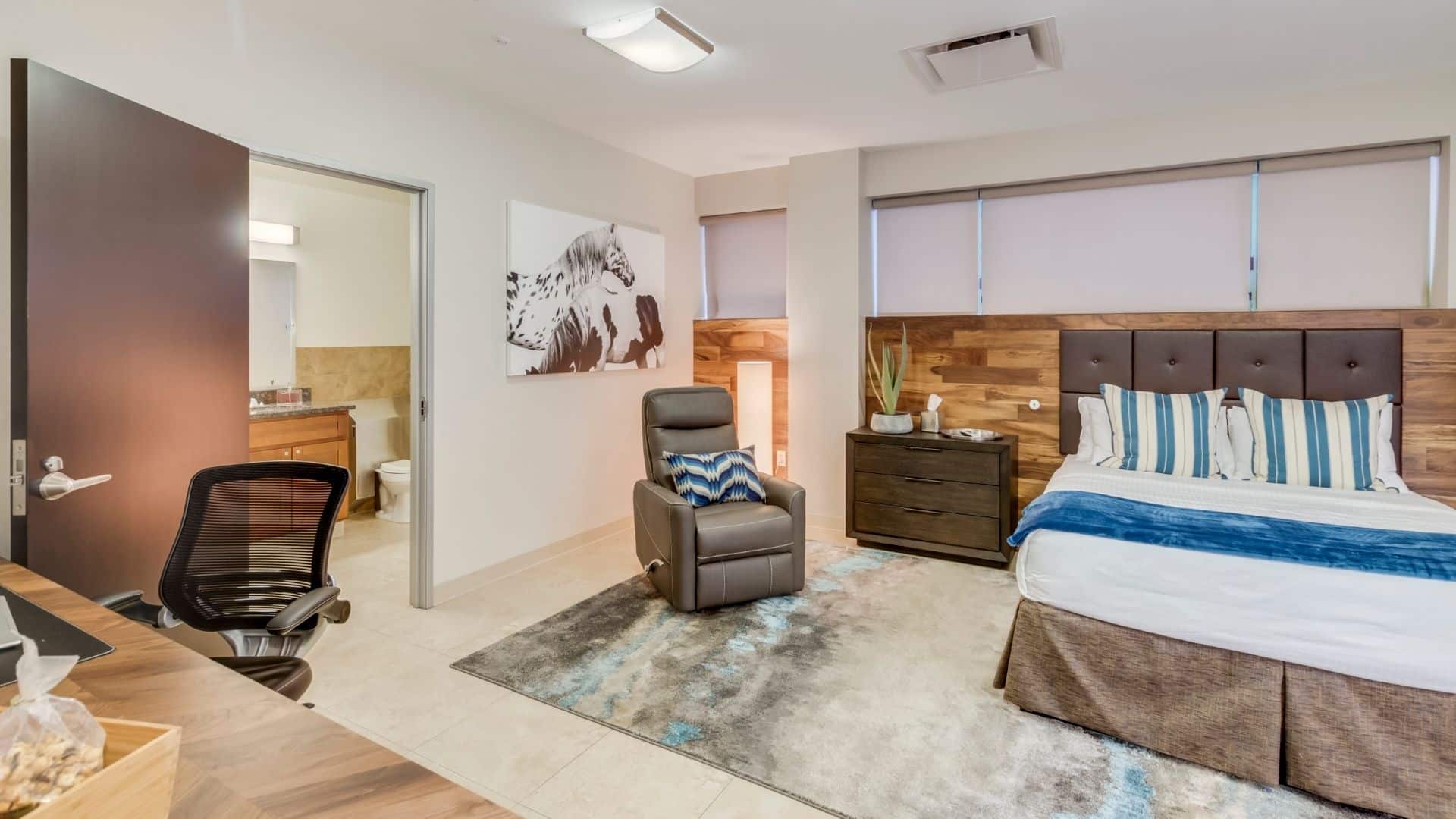

Inside a Luxury Residential Recovery Program

Medical Providers:
Dr. Michael Vines, MD
Alex Spritzer, FNP, CARN-AP, PMHNP
Clinical Providers:
Natalie Foster, LPC-S, MS
Last Updated: August 12, 2026

People rarely start looking for rehab because life feels manageable. Usually, something has become too difficult to ignore. Relationships, work, or health may be suffering. For families, the search often begins with a simple question: what kind of setting gives this person the best chance to focus on getting better?

According to SAMHSA’s 2025 National Survey on Drug Use and Health, nearly 45 million Americans age 12 and older met criteria for a substance use disorder in the previous year. Those people do not all need the same type of care.

A luxury residential recovery program is built for people who need structured, live-in treatment but also value privacy, comfort, and a more individualized experience. The word “luxury” may suggest upscale surroundings, but stronger programs use them to support recovery. The setting should make it easier to sleep, participate in therapy, and step away from triggers that can complicate early recovery.


Our Addiction Treatment Centers

Find care built around you. Start exploring treatment options.

What is a Luxury Residential Program?

A luxury residential program is a live-in treatment setting where clients stay on site while receiving addiction care. Instead of attending therapy for a few hours and returning home, the person spends each day in an environment built around recovery.

Imagine someone who has tried outpatient counseling several times. The sessions help, but every evening they return to the same stressful home, the same people they used substances with, or a work routine that keeps them overwhelmed. Sometimes the surroundings make change harder to maintain.

Residential care creates temporary distance from those patterns. A typical day may include individual therapy, group therapy, recovery education, meals, exercise, quiet time, and planning for life after treatment. Psychiatric care may also be part of the treatment program.

A luxury residential recovery program usually adds more privacy and flexibility. Clients may have a private room, smaller groups, upgraded meals, fitness options, outdoor spaces, or holistic therapies. Some luxury rehab facilities also provide executive accommodations for people who need limited access to professional responsibilities.

Amenities only matter if the clinical care is strong. A center should evaluate substance use, mental health symptoms, relapse history, family dynamics, and physical health before developing an individualized treatment plan. For people dealing with addiction and mental health concerns together, dual diagnosis treatment may be especially important.

Luxury Rehab vs Standard Rehab

The discussion around luxury rehab vs standard rehab is often oversimplified. More expensive care is not automatically better care.

Standard treatment facilities can provide excellent services, including experienced therapists, medical staff, evidence-based therapies, and discharge planning. A luxury setting does not automatically improve those things.

The difference is often found in how care is delivered. A standard rehab may use shared rooms, larger therapy groups, fixed schedules, and fewer optional services. A luxury treatment program may have a smaller client population, private living spaces, additional wellness services, and more room to adapt care around individual needs.

For some people, those details matter. A client who shuts down in large groups may participate openly in a smaller setting. Someone in a public-facing profession may feel safer at a discreet facility. Another person may sleep better when they have a private room.

Look beyond appearance when comparing rehab programs. Ask how often clients receive individual therapy, who supervises the clinical team, and whether the center treats co-occurring mental health conditions.

Then consider the extras. Exercise, yoga, massage, nutrition support, meditation, or other holistic therapies may help people manage stress and build healthier routines. They should support the recovery process, not replace it.

A scenic property can make treatment more comfortable. It cannot do the work for the client.

Take recovery beyond the basics. Speak with someone who can help.

Who is Luxury Treatment Program Best for?

A luxury treatment program may fit someone who needs residential structure but knows that privacy, smaller groups, or a calmer setting will help them participate more fully.

Professionals and executives often consider this level of care because confidentiality and work responsibilities may be concerns. It can also help people who have tried treatment before and felt overlooked in a large facility.

One person may be dealing with alcohol use and unresolved trauma. Another may be recovering from opioid use while managing depression. Someone else may repeatedly relapse after returning to the same social environment. Those situations call for different strategies.

Good treatment should feel personal, with the team looking at substance use history, mental health, physical health, previous treatment, family relationships, work pressure, and recovery goals. That information shapes the individualized treatment plan.

A holistic approach can add support. Exercise, mindfulness, yoga, nutritional counseling, or creative therapies can give people additional ways to manage stress. Holistic healing works best when combined with clinical treatment.

Residential treatment may also be one stage of a longer plan. After discharge, a client may transition to outpatient treatment, sober living, continuing therapy, or support groups. A strong center begins preparing for those next steps before the residential stay ends.

Is Luxury Rehab Covered by Insurance?

Families often search for luxury rehab covered by insurance, but is it realistic? In some cases, insurance may cover part of treatment.

Health plans may cover medically necessary substance use disorder care when residential treatment is included under the policy. What insurance generally does not cover simply because a center is upscale are premium amenities that are not considered part of medical or behavioral health treatment.

An insurer may approve residential addiction treatment while room upgrades or nonclinical wellness services remain the client’s responsibility.

Coverage can depend on whether the facility is in network, prior authorization, the deductible, coinsurance, and the insurer’s medical-necessity criteria. Length of stay may also be reviewed during treatment.

Before admission, ask more than “Do you take my insurance?” Find out whether residential treatment is covered, whether the center is in network, what the likely out-of-pocket cost is, and whether ongoing reviews are required.

Many treatment facilities can verify benefits before admission. Verification does not guarantee final payment, but it can make the financial picture clearer. If coverage is denied, ask for the reason in writing. Some decisions can be appealed when clinical information supports the need for residential care.

Make space for lasting recovery. Find the support you need.

Finding Luxury Residential Rehab

Finding the right luxury residential recovery program takes more than scrolling through photos of bedrooms, pools, and mountain views.

Start with the daily experience. Ask how much individual therapy is included. Are groups small enough for people to participate? Does the same clinician follow the client throughout treatment? Is dual diagnosis treatment available? How does the center respond when someone has a difficult day and wants to leave?

Those questions reveal more than a list of amenities.

Then consider the environment. A private room may help someone decompress after therapy. Exercise and outdoor time can support routine. Good nutrition may matter if substance use has affected appetite or physical health. Holistic therapies can provide additional ways to manage stress.

At The Hope House in Scottsdale, residential treatment is designed around a smaller, more private setting where individualized care can remain central to the experience. For someone comparing Arizona options, that environment may feel very different from a large, institutional treatment center.

The purpose of residential treatment is not to hide from real life. It is to create enough stability for someone to understand what has been happening, practice healthier responses, and prepare for what comes next.

A strong luxury residential recovery program should have a plan for that next stage. That may include outpatient treatment, sober living, therapy, medication support, family involvement, or community support groups. Comfortable surroundings can help someone settle into care, but the better measure is whether the person leaves with stronger skills, reliable support, and a practical plan for long-term recovery.

Find privacy, structure, and support. Reach out to our team.